
Rutgers-Aggregation
- Title
- Rutgers-Aggregation
Items
-
Phillis (b. 1795)Phillis was a black woman born around 1795. She lived in New Brunswick, NJ. She was enslaved by Staats Van Deursen, the Treasurer of Queen's College (now Rutgers University) in New Brunswick. In 1817, Staats Van Deursen sold Phillis to a man named Jacob Klady, a New Jersey landholder who was getting ready to move to Ouachita Parish in Louisiana to establish a plantation. Klady took Phillis to Louisiana with him. Phillis's fate after moving to Louisiana is uncertain.
-
Phillis (b. 1807)Phillis was born in 1807, the child of Patty (enslaved by James Schureman of North Brunswick, NJ). Under the provisions of New Jersey's Gradual Abolition Act of 1804, she was considered a slave for a term of 21 years and would become eligible for emancipation upon reaching that age.
-
Phillis Neilson (b. 1780s)Phillis was a woman of African descent and the daughter of Flora. She was born sometime between 1782 and 1787. In January 1787, Flora's enslaver Anthony L. Bleecker of New York City sold Flora together with her daughters Phillis and Ann to John Neilson of New Brunswick, NJ. Phillis was a young child at the time of this sale. Phillis remained enslaved in the Neilson household for decades. In 1820, she became a member of the African Association of New Brunswick, with permission from John Neilson. She was listed in the organization's membership rolls as "Phillis Nelson" from 1820 to 1822 (Nelson being the phonetic spelling on the last name Neilson), and she paid dues of 25 cents on several occasions. In January 1822, John Neilson manumitted Phillis, and she became a free woman. She would have been approximately 35 to 40 years old at the time, 40 being the maximum age eligible for manumission under New Jersey law.
-
Prince (b. 1792)Prince was a Black man who lived in New Brunswick, NJ, in the 1810s. He was born around 1792. On May 25, 1815, when he was about 23 years old, enslaver Cornelius C. Vermeule sold him to John Neilson (1745-1833) for 150 dollars for the term of 4 years, 3 months, and 6 days. At the end of that term, on September 1, 1819, Prince expected to attain freedom. The terms of the 1815 sale contract suggest that this expected date of manumission was set by some prior indenture agreement between Prince and Cornelius C. Vermeule.
-
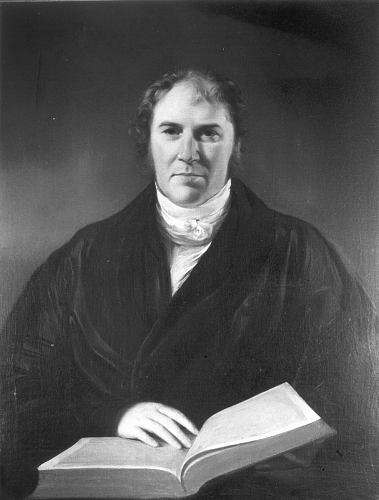 Robert Adrain (1775-1843)Robert Adrain was a professor of mathematics at Queen's College (now Rutgers University) in 1810-1813 and again in 1825-1827. Middlesex County records for the early 19th century indicate that he was an enslaver. His sons Robert Adrain Jr. (RC 1827) and Garnett B. Adrain (RC 1833) graduated from Rutgers and lived most of their lives in New Brunswick, NJ. The following is a biographical sketch of Robert Adrain, from the Guide to the Robert Adrain Collection, 1826-1840 (R-MC 154), at Special Collections and University Archives, Rutgers University Libraries: Robert Adrain was born on September 30, 1775, in Carrickfergus, Ireland, the son of a Frenchman who had fled to Irish shores, and an Irish mother. In Ireland, he opened a school and became a math tutor, as well as taking on a commission to tutor in the private home of an Irish official in service to the British crown. During the Irish Uprising in 1798, Adrain became an officer in the insurgent Irish forces and nearly died--shot by one of his own soldiers and left for dead. He recovered in the care of friends, and once well, headed to the United States of America. There, Mrs. Theobald Tone, the widow of his commanding officer in the Irish uprising, gave him lodgings and he became a school teacher in Princeton, New Jersey. In 1805 he moved to York, Pennsylvania, to become principal of an academy there. Adrain's publications, such as “View of Diopahntine Algebra" in The Correspondent, led to his appointment to the faculty of Queen's College in New Brunswick, New Jersey as professor of mathematics in 1809. In 1810 the college awarded him an honorary master of arts and he remained on the faculty until 1813. He later became professor of mathematics and natural history at Columbia College in 1814, where he stayed until 1825. While at Columbia, his official title changed in 1820 to professor of mathematics and astronomy. His reasons for leaving Columbia are presently unknown. In 1825 Queen's College, which had closed due to financial problems, reopened as Rutgers College and Adrain rejoined the faculty and served until 1827, when he moved to Philadelphia to teach at the University of Pennsylvania. One year later Adrain became vice provost. He ultimately resigned his position at Penn in 1834. Records explain that his resignation came after his inability to control the students in his classroom, although they remain vague as to the exact circumstances as to what incited the ruckus for class after class. After a two year break, Adrain returned to New York to teach at Columbia College Grammar School, staying there from 1836 to 1840. He returned to New Brunswick, New Jersey after that, staying there until his death on August 10, 1843. During his time at Rutgers and Columbia, Adrain was active in professional organizations and authored a number of publications. In 1812 he became a fellow of the American Philosophical Society located in Philadelphia and in 1813 a fellow of the American Academy of Arts and Sciences in Boston. Adrain contributed to the Mathematical Correspondent as well as published in The Analyst in 1808, and again in 1814. His Mathematical Diary proved to be a more successful journal and ran for thirteen volumes from 1825-1833. He calculated the Gentleman’s Diary and Almanac in 1811, published the first edition of Huttons Mathematics in North America in the mid 1810s and “Investigation of the Figure of the Earth, and the Gravity in Different Latitudes" as well as becoming known for the method of least squares. Adrain had seven children by his wife Anne Pollock, including Garnett Bowditch Adrain, who served in Congress from 1856-1860.
-
Robert Boggs (1766-1831)Robert Boggs (1766–1831) was an enslaver who resided in New Brunswick, Middlesex County, NJ. He was the eldest child of Dr. James Boggs and Mary Morris. He studied law and practiced law with his uncle, judge Robert Morris, in New Brunswick. He became the clerk of the U.S. District Court. He served as a trustee of Rutgers College from 1800 until his death in 1831. He was also an active and influential member of the Christ Church, New Brunswick, and was buried in the Christ Church graveyard when he passed away. Note that some modern family trees refer to him as "Robert Morris Boggs" (Morris being his mother's maiden name), but archival documents usually refer to him as Robert Boggs (without listing a middle name), and it appears he usually signed his name "Robt Boggs." Documents referring to "Robert M. Boggs" and signed "R. M. Boggs" in the 1810s and 1820s likely belong to his son Robert Morris Boggs (1796-1827) who was in business for himself in New Brunswick since about 1817.
-
Robert Finley (1772-1817)Rev. Robert Finley was a Presbyterian clergyman and the chief founder of the American Colonization Society. He was born in Princeton and graduated from the College of New Jersey (later Princeton University) at the age of 15. He was the pastor of the Presbyterian Church in Basking Ridge, NJ, from 1795 to 1817. In 1817, shortly before his death, he became the president of the University of Georgia and moved to Athens, Georgia.
-
Robert Morris Boggs (1796-1827)Robert Morris Boggs (1796-1827) was an enslaver who resided in New Brunswick, NJ. He was the son of attorney Robert Boggs (1766-1831) and Maria Morris. He worked for a brief time in the shipping business in Philadelphia at the beginning of his career and then moved back to his hometown of New Brunswick where he ran a general store and became engaged in a real estate business until he died at the age of 31.
-
 Rutgers UniversityQueen's College was founded by a group of Dutch Reformed ministers and their supporters in New Brunswick, New Jersey, in 1766. It was originally a school for white men who primarily came from elite Dutch families in the New York and New Jersey area. In 1825, the school was renamed Rutgers College in honor of benefactor Henry Rutgers. Many of the school's founders, trustees, and benefactors, including Henry Rutgers, were slaveholders. The historic campus of Queen's College is part of Rutgers University–New Brunswick. Campuses in Newark and Camden were established and integrated into the Rutgers University system in the 20th century.
-
Sam (b. 1774)Sam was a Black man who lived in New Jersey. He was born around 1774. He was enslaved by a man named James Stevenson of Amwell, Hunterdon County (who was a Queen's College graduate). In April 1792, when Sam was 18 years old, he ran away from James Stevenson seeking his freedom. James Stevenson placed a newspaper ad offering a reward for Sam's return. The ad described Sam as a "Negro Boy" who was 5 feet and 6 or 7 inches tall.
-
Samuel HallettSamuel Hallett was an enslaver who resided at Hallett's Cove, New York, in the mid 18th century.
-
Samuel LaneSamuel Lane was a Black man who was enslaved by Andrew Kirkpatrick. He gained freedom on August 21, 1818, when Andrew Kirkpatrick manumitted him. Lane's date of birth is unknown. New Jersey law restricted manumissions to persons between the ages of 21 and 40; thus, in order to be eligible for manumission in 1818 Lane had to have been born between 1778 and 1797. Lane was a founding member of the African Association of New Brunswick in 1817, and the records of that organization refer to him variously as "Samuel Lane" or "Samuel Lain." He joined the organization while he was still enslaved, and he continued his membership after he gained freedom.
-
SarahSarah was an enslaved woman who was manumitted by Andrew Kirkpatrick (a prominent Queen's College / Rutgers trustee and benefactor) in July 1802.
-
 Sojourner Truth (c. 1797-1883)Sojourner Truth was a famous Black abolitionist and women's rights advocate. She was born in bondage in Swartekill (near present-day Rifton), a hamlet in Hurley, Ulster County, New York. Her parents were James and Betsy Baumfree, who were enslaved to Johannes Hardenbergh Jr. (1729-1799), the brother of the first president of Queen's College (later Rutgers) Jacob Rutsen Hardenbergh. Her name at birth was Isabella. Although the exact year and date of her birth is not known, we know that she was born shortly before New York began to gradually abolish slavery. Because she was born before the Act for the Gradual Abolition of Slavery went into effect on July 4, 1799, Isabella inherited her mother's status as an enslaved person. Isabella was an infant when Johannes Hardenbergh Jr. passed away in 1799 and his son Charles Hardenbergh inherited Isabella and her parents. After Charles Hardenbergh's death in 1808, Isabella was sold at auction at the young age of 9, along with a flock of sheep, for 100 dollars. Until this age, Isabella grew up speaking Dutch, which was the language spoken in the Hardenbergh household. After being sold several times in the next few years, she ended up at the household of John Dumont at West Park, New York. She lived there for about 16 years. She bore five children, one of whom was the result of a rape by John Dumont. In a defiant act of resistance, Isabella freed herself by leaving John Dumont's home together with her infant daughter Sophia in 1826 (months before she became eligible for legal emancipation under New York law). In her autobiography, she described how she "walked away" from John Dumont. She left behind her other children who were bound to serve John Dumont for a term until they could gain freedom under New York's gradual abolition law. Upon gaining her freedom she adopted the name Isabella van Wagenen, taking the last name of the van Wagenen family who had sheltered and helped her. When she learned that her son Peter, who had been sold by John Dumont at age 5, was illegally taken across state lines to Alabama, she took the issue to court. She sued her son's new enslaver Solomon Gedney and won Peter's return to New York where he could become free. The case was one of the first times a black woman challenged a white man in court and won. In 2022, the New York State Archives in Albany announced that archivists had uncovered 8 pages of the 1828 court documents pertaining to the suit that was filed in the New York Supreme Court under the name Isabella van Wagenen. Previously, these documents were considered lost to history. The documents include the deposition given by Isabella van Wagenen, the writ of habeas corpus, Somolon Gedney's response, and the court order freeing Peter. As a free woman, she became a devout Christian. She had a series of religious experiences that prompted her to change her name to Sojourner Truth and to preach publicly about the causes she cared about: the abolition of slavery and women's rights. In 1850, she published her life story in a book called The Narrative of Sojourner Truth. She dictated the book to Olive Gilbert. Sojourner Truth did not learn to read or write, but she was a noted orator well known for her moving speeches. She continued working for Black freedom until her death in 1883.
-
Staats Van Deursen (b. 1773)Staats Van Deursen (born in 1773) was an enslaver who resided in New Brunswick, NJ. He was a graduate of Queen's College (now Rutgers University), class of 1791. His father Willem (William) Van Deursen (1736-1816) had been one of the early trustees of the college. In 1807, Staats Van Deursen became a trustee of Queen's College, and he served as the college's Treasurer from 1813 to 1823. He also sent his son John Schurman Van Deursen to study at the college in the 1810s. In the early 19th century, Staats Van Deursen served in various roles in city government, including as treasurer of New Brunswick and as Overseer of the Poor for the township of North Brunswick (which contained within it most of the the city of New Brunswick). Staats Van Deursen's younger brother William Van Deursen (1791-1873) was also a Queen's College alumnus and prominent physician in New Brunswick. In 1817, Staats Van Deursen and his brother William decided to sell two young Black women to a man named Jacob Klady who was moving from New Brunswick to Ouachita, Louisiana, to establish a plantation there. As the result of Staats Van Deursen's actions, a 22-year-old woman named Phillis was taken away from New Jersey to Louisiana to work on Klady's plantation. At the same time, his brother William sold a woman named Dinah, who was also taken to Louisiana by Klady.
-
Theodorus Jacobus Frelinghuysen (1691-1747)The Rev. Theodorus Jacobus Frelinghuysen (1691-1747) was a Dutch Reformed minister who immigrated to New Jersey and settled in the Raritan Valley in 1720. He is best known for bringing religious fervor to the Raritan Valley during the First Great Awakening. He pastored several churches in the Raritan Valley, including congregations in Raritan, New Brunswick, Six-Mile Run, and Three-Mile Run (locations in present-day Middlesex County and Somerset County). Although he passed away nearly two decades before Queen's College (later Rutgers) was officially established, he is widely acknowledged as the progenitor of the school by Rutgers historians who credit him with originating the intellectual ideas that would eventually prompt his sons to seek a charter for a Dutch Reformed school in New Jersey. Frelinghuysen enslaved several persons of African descent in his household and worked to convert them to Christianity. The most well-known of these enslaved people was Ukawsaw Gronniosaw. Frenlinghuysen manumitted Gronniosaw upon his death in 1747, and Gronniosaw went on to publish an autobiography in 1772 where he recounted his life in the Frelinghuysen household.
-
Thomas BostonThomas Boston was a Black man enslaved to Henry Rutgers in New York City. He gained his freedom on June 12, 1817, when Henry Rutgers manumitted him.
-
Thomas BullmanThomas Bullman lived during the Revolutionary War in New Jersey. He was involved in the sale of at least one Black person during the war at public auction in Elizabethtown, and his signature appears on a receipt related to the sale.
-
Thomas ReadDoctor Thomas Read was the son of the Rev. Israel Read. He grew up in the 18th century in Bound Brook, NJ, where his father was the pastor of the Presbyterian Church for many years. He and his brother Archibald inherited a man named Tony from the pastor's estate and sold Tony several years later in 1798. By this time, Thomas Read was a physician living in Montgomery County in upstate New York. The sale took place in New Brunswick, NJ. His family name is variously spelled Read or Reed in historical documents.
-
Tom (b. 1797)Tom was a Black man born around 1797. He was enslaved by Peter Vredenburgh (1745-1823), a prominent merchant and politician from New Brunswick, NJ. Vredenburgh wrote in his will that he wished Tom to be manumitted after his death. Tom was manumitted on September 12, 1823, by the executors of the will of Peter Vredenburgh. He was aged 26 at the time of manumission.
-
TonyTony (or Tone) was a Black man who lived in Bound Brook, NJ, in the late 18th century. He was enslaved by the Rev. Israel Read, who was the pastor of the Presbyterian Church at Bound Brook from 1750 until his death in 1793. When the pastor died, he bequeathed Tony to his sons Thomas and Archibald, who then sold Tony to John Neilson in 1798. The sale contract stipulated that Tony would be sold for a term of 5 years, and the wording of the sale contract seems to imply that Tony would be free at the expiration of this term, i.e. in 1803.
-
Ukawsaw Gronniosaw (c. 1710-1775)Ukawsaw Gronniosaw was born in Bornu (present-day northeastern Nigeria) around 1710 (his exact year of birth is unknown). As a young man he was captured in Africa and sold to a Dutch slave trader. After surviving the treacherous voyage from Africa to the Caribbean and then to New York, Gronniosaw was purchased by the Rev. Theodorus Jacobus Frelinghuysen and brought to Raritan to live and work. Gronniosaw missed his family in Africa and suffered greatly because of this. He repeatedly asked Rev. Frelinghuysen to allow him to return to his family, but he never got a chance to go back home. He was taught about the Christian faith by the minister. Although Gronniosaw found the tenets of his enslaver's faith strange at first, he eventually converted to Christianity. Upon the Rev. Theodorus Jacobus Frelinghuysen’s death, Ukawsaw Gronniosaw was granted his freedom, albeit with the understanding that he would stay on and remain as a servant to the household. Eventually, Gronniosaw left New Jersey and the Frelinghuysen family and became a sailor. He sailed throughout the Caribbean and Europe and then settled in England, taking the English name James Albert. It was here in England that he published his autobiography in 1772. The book was titled: A Narrative of the Most Remarkable Particulars in the Life of James Albert Ukawsaw Gronniosaw, An African Prince, as Related by Himself. This is one of the earliest autobiographies ever published by a formerly enslaved person. The book provides a rare glimpse of what life was like for enslaved people on the Raritan in the middle of the 18th century. Gronniosaw died in Chester, England, in 1775.
-
Unnamed African man [Livingston]An African man was sold to slave traders in Africa and brought to New York City in the fall of 1752, where he was enslaved to Philip Livingston. This man ran away from Philip Livingston on October 28, 1752, shortly after disembarking in New York City. The enslaver placed an advertising in the New-York Gazette offering 3 pounds as a reward for the capture and return of this African man. The name of the African man was not recorded in the advertisement. The advertisement noted that the man spoke no English or Dutch, but only the language of his homeland. He retained his African hairstyle, which was described by Philip Livingston as "hair or wool...curled in locks, in a very remarkable manner," and this would make him stand out among the other Black residents of the area. The enslaver supposed that the freedom seeker made his way toward the woods near Harlem, which was at that time a small village north of New York City on the Island of Manhattan. This unnamed African man is featured in "New York at Its Core: Port City, 1609-1898," a permanent gallery exhibition at the Museum of the City of New York. His story is told in an interactive biographical display titled "Livingston's Runaway: Resisting Slavery."
-
Unnamed Black man [Hardenbergh]A Black man was mentioned in a letter by the Rev. Jacob Rutsen Hardenbergh in 1777. The man's name was not recorded in the letter, and nothing further is known about him aside from his presence at Hardenbergh's home when the letter was written.
-
Unnamed Black man captured from the enemy [Neilson]A Black man, whose name has not been recorded, was captured by the New Jersey militia "from the enemy" during the Revolutionary War circa 1777. This man was previously enslaved by a Loyalist. After he was captured, he was sold by American patriots at public auction. Colonel John Neilson paid 55 pounds for the man. Neilson probably became the man's new legal owner; however, it is not entirely clear from the archival record whether Neilson purchased the man for himself or for someone else.