
Rutgers-Aggregation
- Title
- Rutgers-Aggregation
Items
-
Hannah ClarkHannah Clark was the daughter of Margaret Clark née Imlay and the Rev. Joseph Clark, the pastor of the First Presbyterian Church of New Brunswick from 1797 until his death in 1813. She was born circa 1790s. Her parents enslaved several Black persons in their household in New Brunswick, and Hannah helped her mother with transactions related to the sale of enslaved persons after the death of her father. She was one of heirs of her father's estate.
-
Harry (b. 1826)Harry was born in 1826, the child of Hannah. Harry and his mother were enslaved by Abraham Dumont of North Branch, Somerset County, NJ. Under the provisions of New Jersey's Gradual Abolition Act of 1804, Harry was considered a slave for a term of 25 years and would become eligible for emancipation upon reaching that age. When he was about 2 years old, he was sold together with his mother to Robert Boggs of New Brunswick, Middlesex County.
-
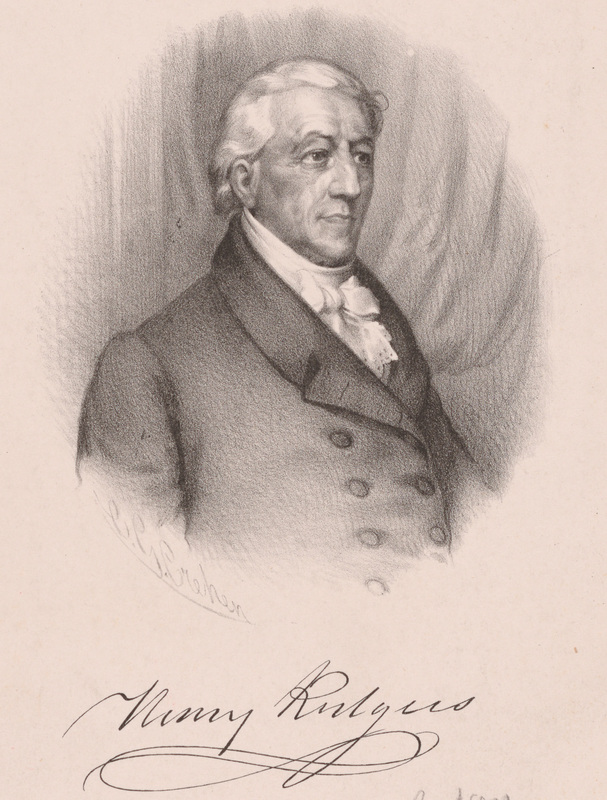 Henry Rutgers (1745-1830)Our school’s namesake Henry Rutgers (1745-1830) was a trustee and an important donor during the college's struggles in the early nineteenth century. Undergraduate classes were suspended at Queen’s College in 1816, but trustees worked to get the college back on solid footing financially. When the college reopened in 1825, the new president Rev. Philip Milledoler proposed to change the school’s name to Rutgers College in honor of one of the most benevolent members of the Dutch Reformed Church. Soon after, Henry Rutgers provided an endowment for the college and purchased a bell for the cupola of the Old Queens building. This bell is still in operation today for special ceremonies and events. Henry Rutgers was a slaveholder for nearly all of his life. He was a wealthy Dutch landowner and developer in New York City where slaveholding was common among his class. His father and grandfather had owned slaves. By the end of the American Revolution, Henry Rutgers supported state laws to limit the slave trade, but he personally continued to exploit slave labor for decades after. According to federal census records, he was the owner of two enslaved people in 1790, five in 1800, and three in 1810. In 1817, Henry Rutgers decided to manumit and set free a black man named Thomas Boston. However, Henry Rutgers continued to own human beings after he manumitted Thomas Boston. The 1820 census shows that Rutgers still owned one slave. Henry Rutgers lived for 85 years and witnessed tremendous changes during his lifetime. In 1827, three years before his death, slavery was finally abolished in his home state of New York.
-
Israel Read (d. 1793)Rev. Israel Read was the pastor of the Presbyterian Church at Bound Brook from 1750 until his death in 1793. He was an enslaver. He mentioned several Black persons in his will, which was written in Piscataway in 1785. His family name is variously spelled Read or Reed in historical documents.
-
Jacob Dunham (1767-1832)Dr. Jacob Dunham (1767-1832) was physician in New Brunswick, NJ. He was the son of Azariah Dunham (1718-1790) and Mary Ford Dunham (c. 1734-1802). He practiced medicine in the city and the surrounding area for over thirty years. He enslaved a man named Will and drew income from hiring out Will to perform strenuous labor around the city. In 1808 and 1809, he got paid for hiring out Will to do construction work for the first permanent building for Queen's College (later Rutgers), the building now known as Old Queens. Dunham's accounting records also document medical treatments that he provided for both enslaved and free people of color in New Brunswick.
-
Jacob KladyJacob Klady was an enslaver who lived in New Brunswick, NJ, in the early 19th century. In 1817, he divested of his landholdings in New Jersey and moved to Ouachita, Louisiana, to establish a plantation there. He sold a farm of 139 acres to the Township of North Brunswick for $6,992 for use as the municipality's "poorhouse farm." He then bought enslaved people in New Jersey and took them to Louisiana. Among the people he brought to Louisiana were Phillis and Dinah (two young women Klady bought from Staats Van Deursen and William Van Deursen) and a young man named Ben (purchased from James Smith).
-
Jacob Rutsen Hardenbergh Jr. (1768-1841)Jacob Rutsen Hardenbergh Jr. (1768-1841) was the son of the first president of Queen's College (later Rutgers). He grew up at his father's parsonage at Raritan (present-day Somerville) and then lived in New Brunswick, NJ, for much of his life. Historical records indicate that he bought and sold enslaved individuals in the late 18th century at the time when he was the Secretary of the Board of Trustees of Queen's College. He attended Queen's College while his father was president and received his degree in 1788. He was an instructor at the college in 1794. He was a trustee of the college for nearly 50 years from 1792 until his death in 1841, serving as the Secretary of the Board of Trustees in 1793-1800 and again in 1833-1835. He studied law and worked briefly as a lawyer, then went into banking and industry. He was the founder and president of the Bank of New Brunswick, the first bank established in the city, which was known locally as Hardenbergh's bank. He was also the owner of Bloomfield Works (lumber and powder mills), near Spottswood, NJ.
-
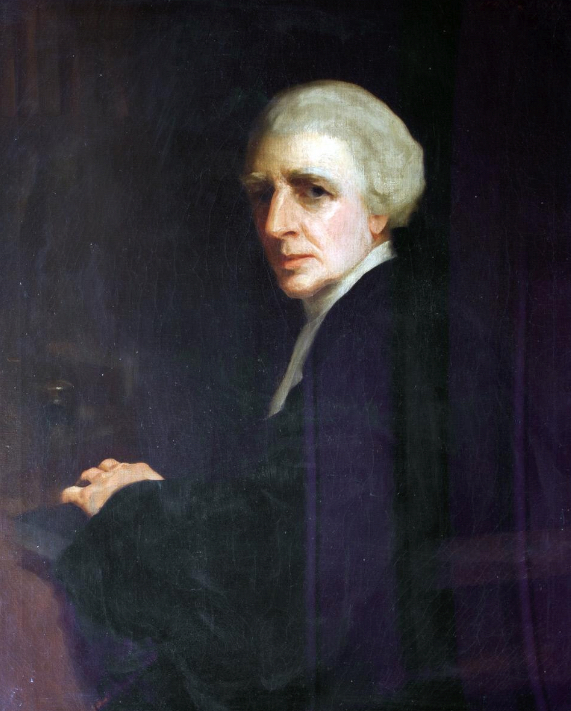 Jacob Rutsen Hardenbergh Sr. (1736-1790)Jacob Rutsen Hardenbergh (1736-1790) was the first president of Queen's College (later Rutgers). He was one of the chief founders responsible for establishing the college in 1766 and was active in the college's affairs for two decades before he was appointed its first president by the trustees in 1786. Hardenbergh Hall, a dormitory located on George Street on the College Avenue campus, was named for him in 1956. Hardenbergh was a Dutch Reformed minister who came from a prominent slaveholding family in Ulster County, New York, and took over the churches in the Raritan Valley after his mentor Johannes Frelinghuysen passed away. His parsonage was located in present-day Somerville (now the Old Dutch Parsonage historic house). Slaveholding was an ordinary part of life for the Dutch landowners in New York and New Jersey in this era, and the Rev. Hardenbergh was used to exploiting enslaved labor in his home. His wife, the widow Dina Van Bergh, also inherited three slaves from her first marriage. Unfortunately we do not know the names of the enslaved individuals who labored in Hardenbergh's parsonage in New Jersey. However, we do know that among the many Black people enslaved by Hardenbergh's family in Ulster County was a girl named Isabella Baumfree who would grow up to become a famous abolitionist and women's rights advocate. Isabella's enslaver was president Hardenbergh's brother Johannes Hardenbergh Jr. After Isabella escaped to freedom and became a preacher, she adopted the name Sojourner Truth. President Hardenbergh never met Sojourner Truth as she was born about seven years after his death, but he was likely well acquainted with her parents James and Betsey Baumfree who served the Hardenbergh family for decades. The following is a description of the house (with slave quarters) where Jacob Rutsen Hardenbergh grew up. The house was originally built by his great-grandfather Jacob Rutsen in 1700. This description is from the book The Hardenbergh Family: A Genealogical Compilation by Myrtle Hardenbergh Miller (New York: American Historical Co., 1958), page 58: "a stone building sixty-two by twenty-five feet in dimensions. The main house had numerous rooms, fireplaces, and had handsome panelled woodwork and recesses for beds enclosed by panelled doors. At the southwest end and opening into the house were the slave quarters of stone fifteen by eighteen feet, on the same end in the cellar was a cell in which delinquent slaves were confined." This house was originally called Rosendale (giving its name to the town of Rosendale in Ulster County, NY). After Jacob Rutsen Hardenbergh's grandparents Johannes Hardenbergh (1670-1745) and Catherine (nee Rutsen) moved into the house, it came to be known as Hardenbergh Hall.
-
James Abeel (1733-1825)Col. James Abeel was born in Albany, New York, and lived in New Jersey for much of his adult life. He served in the Revolutionary War and was quartermaster on General Washington's staff. He was the son of David Abeel and Mary Duyckick. By marriage to Gertrude Neilson, he was the brother-in-law of John Neilson (1745-1833) of New Brunswick, NJ. James Abeel died in New Brunswick, NJ.
-
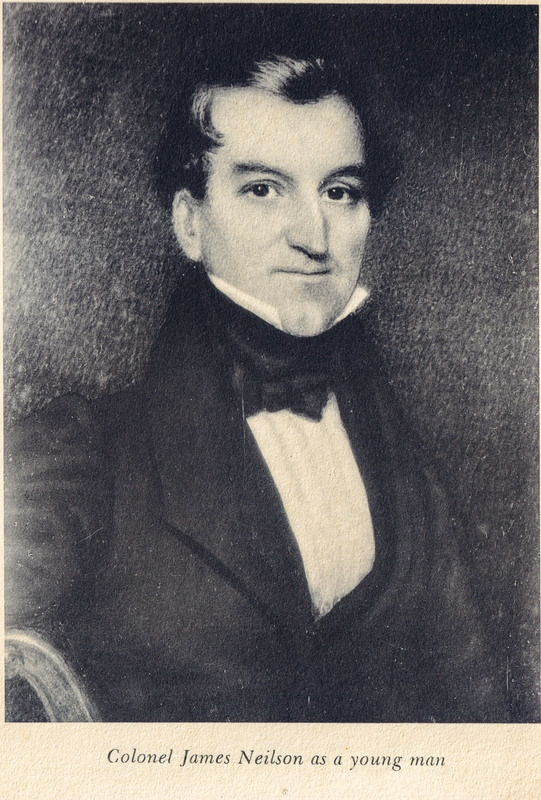 James Neilson (1784-1862)James Neilson was a prominent New Brunswick businessman and a benefactor of Rutgers College. He served on the Rutgers Board of Trustees from 1834 until his death in 1862. He supported Rutgers with regular monetary contributions and donated land for the college campus. James Neilson was colonel of the New Jersey State Militia and served in the War of 1812; thus he is often called Colonel James Neilson in historical sources (not to be confused with his father Colonel John Neilson, who served in the Revolutionary War). In 1830, James Neilson built a mansion called Wood Lawn that would serve as the family home for the Neilsons for over a hundred years, until it was bequeathed to Rutgers University upon the death of Neilson's son James Neilson Jr. in 1937. Neilson enslaved several African Americans throughout his life, with the last known records of slaveholding dating to the 1830s when the Neilson family resided at Wood Lawn mansion.
-
James Neilson (c. 1700-1783)James Neilson immigrated from Ireland circa 1716 to Perth Amboy and then moved to New Brunswick, New Jersey, where he established himself as one of the area's most prominent merchants. He was the owner of several vessels that traded between Europe and America. Although the Trans-Atlantic slave trade was not his main business, shipping records indicate that he participated in bringing captives to New Jersey. Records in the Slave Voyages Intra-American Slave Trade database show that his schooner called New Brunswick brought enslaved persons for sale from Rhode Island to Perth Amboy on at least three occasions between 1747 and 1751, each time carrying several enslaved persons, plus cargo of rum and sugar (presumably from the Caribbean). James Neilson was the brother of physician John Neilson (1717-1745), who also immigrated from Ireland to New Jersey. After his brother's untimely death in 1745, James Neilson adopted his brother's infant son John Neilson Jr (1745-1833), raised the boy to go into the family mercantile business, and made John Jr his heir. The nephew John Jr would go on to become a Revolutionary War commander in New Jersey (known locally as Colonel John Neilson) and a long-time trustee and benefactor of Rutgers University (originally Queen's College).
-
James Parker Jr. (1776-1868)James Parker Jr. (1776-1868) was a wealthy politician and enslaver and from Perth Amboy, NJ. His parents were James Parker Sr. (1725-1797) and Gertrude Parker née Skinner (1739-1811). His family was from Perth Amboy, where his father had served as Mayor, but James Jr. was born in Bethlehem, Hunterdon County, because his parents moved to a farm called "Shipley" there during the Revolution. The Parkers moved to New Brunswick in 1783 and then returned to Perth Amboy two years later when James Jr. was about nine years old. He attended Columbia College in New York City and began his career as a merchant in the city, but returned to Perth Amboy when he was about 21 years old to manage the family's substantial estate after his father died. Settling in Perth Amboy, he pursued a career as a magistrate and a politician at the local, state, and national level. Among the offices he held in Perth Amboy were Recorder of the City and Mayor. He served several non-nonconsecutive terms in the New Jersey General Assembly between 1806 and 1827. As a state legislator, he grew concerned about the dealings of the Van Wickle slave-trading ring — a nefarious operation that was transporting enslaved people to Louisiana from the port of Perth Amboy, Parker’s hometown. He formed an Association "for the purpose of opposing the practice of Kidnapping and unlawful trade in persons of color" with fellow concerned citizens in July 1818 and served as the Secretary of this group. In 1819, he originated a law that put a stop to the slave-trading ring and made it much more difficult for enslavers to take Black New Jerseyans away from the state. He went on to serve as a Congressman in the U.S. House of Representatives from 1833 to 1837. Middlesex County records indicate that James Parker Jr. and other members of his family were enslavers and held several people in bondage in Perth Amboy in the early decades of the 19th century, during the same period when Parker was working to stop the illegal kidnapping and human trafficking in New Jersey. Parker’s family is crucial to Rutgers history due to their land holdings in New Brunswick. James Jr. and his mother Gertrude donated land to the college from the Parker estate. The nucleus of Rutgers–New Brunswick’s historical campus (with Old Queens, Winants Hall, and Kirkpatrick Chapel) is located on the land donated by the Parker family.
-
James Parker Sr. (1725-1797)James Parker Sr. (1725–1797) was a wealthy enslaver who lived in New Jersey. After his death in 1797, his family donated land from the Parker estate to Rutgers University (then called Queen's College). The nucleus of Rutgers-New Brunswick’s historical campus (with Old Queens, Winants Hall, and Kirkpatrick Chapel) is located on the land donated by the Parkers. --- The following biographical note was created by the New Jersey Historical Society, which holds several manuscript collections pertaining to the Parker family: James Parker (1725-1797), the son of Janet Johnstone (d.1741) and John Parker (1693-1732), served in the colonial military as a young man. Some time after 1746, he left the army and partnered with Beverly Robinson and Andrew Johnston in a mercantile business. The company traded with the West Indies and in 1750-1751, Parker traveled to Jamaica for business reasons. Soon after this trip he settled in Perth Amboy, New Jersey to manage the family estate, which included the mansion known as “The Castle.” He married Gertrude Skinner (d.1811), the sister of Cortlandt Skinner (1727-1799), and with her started a family. Parker served in a number of different capacities throughout his lifetime. He was an agent for the East Jersey Proprietors; an agent for the Hunterdon and Sussex County properties of Sir Robert Barker, an absentee landlord; a lawyer; a councilor under Governor William Franklin (1764-1775); and mayor of Perth Amboy (1771). In 1775, he declined the appointment as one of Perth Amboy’s delegates to the Provincial Congress, choosing instead to stay neutral during the escalating conflict. Though he had loyalist connections and sympathies, he remained neutral and moved his family to the farm he called “Shipley” in Bethlehem (now Union), Hunterdon County, New Jersey. In November of 1777, James Parker and two others were taken as loyalist hostages to ensure the safety of patriot captives. Parker was soon allowed to return to his family at “Shipley,” where they remained until the end of the war. In 1783, the Parkers moved to New Brunswick, New Jersey for two years before returning to the family home in Perth Amboy. James Parker died on October 4, 1797, leaving his son, James (1776-1868), to manage the remaining family lands.
-
James Schureman (1756-1824)James Schureman was an enslaver who resided in North Brunswick, NJ. He was the son of John Schureman (1729-1795) and Antje De Remere (1721-1800). He was one of the earliest graduates of Queen's College (later Rutgers University) in 1775. He served as a Captain of the Middlesex County militia in the Revolutionary War and then went on to become a merchant and politician. His political career included multiple terms as the Mayor of New Brunswick, Councilman for Middlesex County in the New Jersey Legislative Council, as well as U.S. Congressman and U.S. Senator representing the State of New Jersey. He had a house and store on Burnet Street in New Brunswick and also owned a farm at One-Mile Run. Middlesex County Clerk's records include a birth certificate that Schureman submitted for an enslaved child named Phillis (born to a woman named Patty who was enslaved by Schureman). Additionally, Schureman served as one of the executors of the estate of his brother-in-law Peter Vredenburgh and, in that capacity, carried out Vredenburgh's wishes to manumit two enslaved persons named Tom and Margaret, which manumissions were recorded by the County Clerk.
-
James SmithJames Smith was an enslaver who resided in Middlesex County, NJ, in the early 19th century. In 1817, he sold an enslaved young man named Ben to Jacob Klady of New Brunswick. Smith then obtained authorization from county officials allowing Klady to take Ben away from New Jersey to Klady's new plantation in Louisiana. The exact locality of James Smith's residence in Middlesex County is not noted on the documents related to Ben, and it is uncertain whether Smith was also a resident of New Brunswick like Klady.
-
James Stevenson (1763-1839)James Stevenson was an enslaver from Hunterdon County, NJ. He is associated with Amwell and Hopewell. He was the son of John Stevenson (1728-1775) and Elizabeth Throckmorton. He was born in 1763 and died in 1839. He is probably the James Stevenson who graduated from Queen's College (now Rutgers University) in 1789 and served as tutor of the college in 1789-1790 and then again in 1809-1811. He served on the Board of Freeholders of Hunterdon County from 1813 to 1827, and was the Director of the Board for many years.
-
Jef (b. 1773)Jef was a Black man born around 1773. He was enslaved by a Mr. Mattison of Princeton, New Jersey. Letters found in the Neilson Family Papers at Rutgers Special Collections and University Archives provide some information about Jef's life circa 1794 when he was 21 years old. According to this correspondence, Mr. Mattison planned to sell Jef, and Col. John Neilson wanted to buy him and take him to New Brunswick. Whether this sale was ever finalized is uncertain. The letters also mention that at some earlier point in time, Jef was sold to one Mr. Kelsey, but was was "taken back" to the Mattison household at the request of Mr. Mattison's wife. See the related 1794 event for more information and transcripts of the letters that discuss Jef's personality, skills, and life at Mr. Mattison's house.
-
Johannes Hardenbergh (1706-1786)Johannes Hardenbergh (1706-1786) was one of the founding trustees of Queen's College (later Rutgers) and the father of the college's first president Jacob Rutsen Hardenbergh Sr. He was a wealthy landowner and slaveholder who resided in Ulster County, NY, for most of his life. During the last year of his life he came to live in New Brunswick, NJ, with his son Jacob Rutsen Hardenbergh Sr., who was beginning his tenure as college president. He was a member of the First Provincial Congress of New York. Historical records often refer to him as Col. Johannes Hardenbergh; he was a field officer in the Continental Army during the Revolutionary War. He is not to be confused with his father Sir Johannes Hardenbergh (1670-1745) or his son Col. Johannes Hardenbergh Jr. (1729-1799). The following is a description of his house with slave quarters, originally built by his grandfather Jacob Rutsen in 1700, from the book The Hardenbergh Family: A Genealogical Compilation by Myrtle Hardenbergh Miller (New York: American Historical Co., 1958), page 58: "a stone building sixty-two by twenty-five feet in dimensions. The main house had numerous rooms, fireplaces, and had handsome panelled woodwork and recesses for beds enclosed by panelled doors. At the southwest end and opening into the house were the slave quarters of stone fifteen by eighteen feet, on the same end in the cellar was a cell in which delinquent slaves were confined." This house with slave quarters was originally called Rosendale (giving its name to the town of Rosendale in Ulster County, NY), and by the mid-18th century it came to be known as Hardenbergh Hall.
-
Johannes Hardenbergh Jr. (1729-1799)Johannes Hardenbergh Jr. (1729-1799) was a wealthy landowner and slaveholder from Ulster County, New York. He was the brother of Jacob Rutsen Hardenbergh (1736-1790), the first president of Queen's College (later Rutgers). Among the Black people enslaved by Johannes Hardenbergh at his home in Swartekill (present-day Rifton) in Ulster County were James and Betsey Baumfree and their daughter, a girl named Isabella Baumfree, who would grow up to become a famous abolitionist and women's rights advocate. Hardenbergh's son Charles inherited the Baumfree family in 1799 when Isabella was about 2 years old. Years later, after Isabella escaped to freedom and became a preacher, she adopted the name Sojourner Truth. Johannes Hardenbergh was a member of the New York Colonial Assembly before the Revolution. He was a Colonel during the Revolutionary War, as was his father who shared the same name. Historical narratives sometimes confuse the two men because they were both known as Col. Johannes Hardenbergh. His father was the elder Col. Johannes Hardenbergh (1706-1786), and his grandfather was Sir Johannes Hardenbergh (1670-1745).
-
John Annin (b. 1797) [Jack]John Annin, known as Jack, was an enslaved man, born around 1797. His enslaver was Joseph Annin of Somerset County, NJ. In 1807, when Jack was 10 years old, Joseph Annin sold Jack to James Parker Jr. (1776-1868) of Perth Amboy, Middlesex County, NJ. At that time, James Parker promised to manumit Jack when he turned 25 years old. James Parker fulfilled his promise and manumitted Jack on August 8, 1822. The manumission documents listed the man's name as "John Annin (usually called Jack)."
-
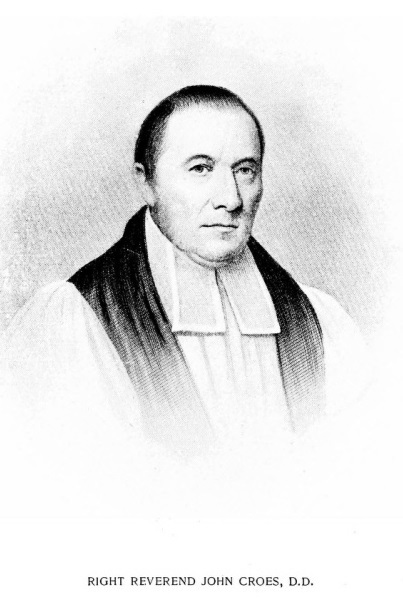 John Croes (1762-1832)The Right Reverend John Croes (1762-1832) was a prelate in the Episcopalian Church in New Jersey. He served as rector of Trinity Church in Swedesboro in the 1790s and was called as rector of Christ Church in New Brunswick in 1801. He was elected and consecrated the first Bishop of New Jersey in 1815. He also served as the Principal of the Queen's College Grammar School (now Rutgers Preparatory School) in 1801-1807, and then as Trustee of Queen's College in 1809-1816. Middlesex County records indicate that John Croes was an enslaver.
-
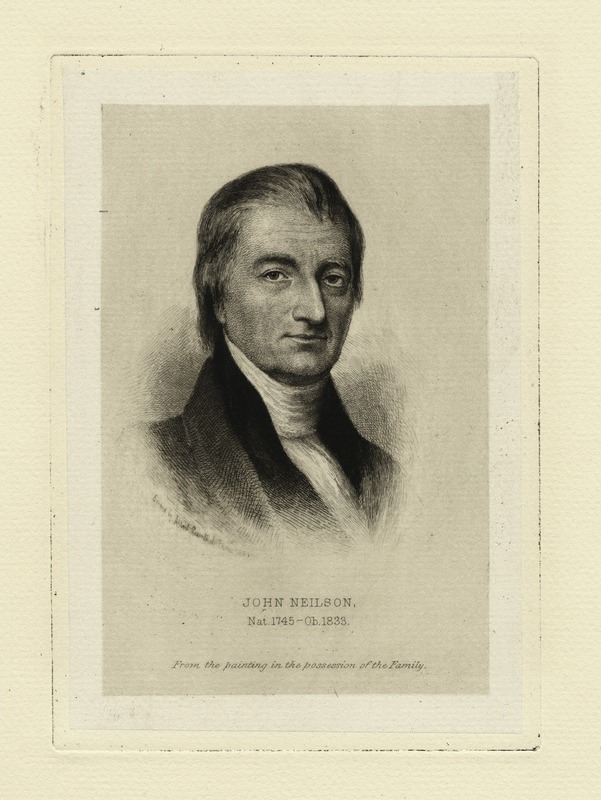 John Neilson (1745-1833)Colonel John Neilson was an early trustee and benefactor of Queen's College (later Rutgers University). His parents were John Neilson (c. 1710s-1745) and Joanna Coeymans. His father died shortly before Neilson was born. Consequently, Neilson was raised by his uncle, the New Brunswick merchant James Neilson (1700-1783), from infancy and worked in his uncle's shipping business trading between Madeira, the Dutch West Indies, and New Jersey. Neilson became the heir to his uncle's mercantile business and estate, which included several enslaved persons. Neilson bought and sold many enslaved persons throughout his life. During the American Revolution, John Neilson served as a colonel in command of the New Jersey militia in the northern part of the state. He served in the New Jersey legislature during and after the Revolution. A statue of John Neilson reading the Declaration of Independence was erected in Monument Square in New Brunswick in 2017.
-
John Powers (1759-1831)John Powers was an enslaver who resided in New Brunswick, NJ. He was a soldier in the Revolutionary War.
-
Joseph AnninJoseph Annin was an enslaver who resided in Somerset County, NJ, in the early 19th century. He was associated with the area of Bernards Township.
-
Joseph BaldwinJoseph Baldwin was an enslaver from Newark, NJ. In 1814, he sold a Black man named Teunis to James Neilson (1784-1862).